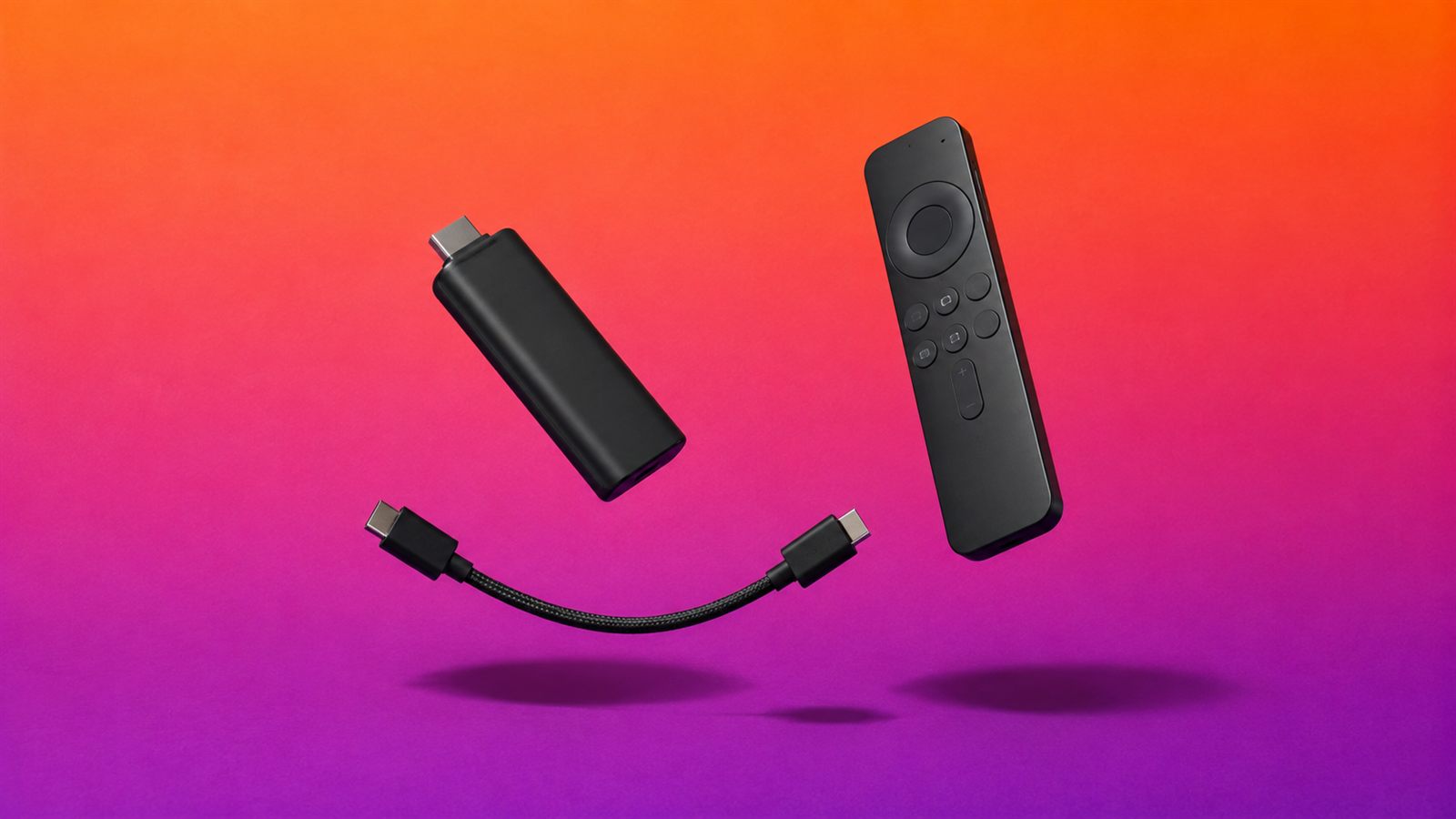
The Fire TV Stick is the most common device our subscribers plug Zoryflix into, and it is also the one that generates the most confused first messages. Not because it is difficult — the whole job takes about six minutes — but because the app you need is not in Amazon’s store, so the normal “search, install, done” reflex fails at the first hurdle.
This guide walks the actual route: two settings, one helper app, your player, your credentials. Everything is a supported part of Fire OS — no hacked firmware, no “unlocked” stick from a marketplace seller, nothing that voids anything. Follow it in order and the stick will be showing live TV before the kettle boils.
What you need before you start
Gather these four things first. Every one of them takes longer to find mid-setup than it does to have ready.
| What | Why it matters |
|---|---|
| A Firestick already set up | Registered to your Amazon account and reaching the home screen |
| Your subscription details | An Xtream Codes server URL, username and password — or an M3U playlist link |
| A stable connection | 25 Mbps at the stick for 4K, 10 Mbps for HD — measured on the stick, not on your phone |
| Six minutes | Ten if you also tidy the channel list, which you should |
If you have not bought a subscription yet, get the credentials first — steps 4 onwards do nothing without them. Ours arrive by email a few minutes after ordering, and every plan comes with a 7-day money-back guarantee.
Which Firestick you have, and whether it is enough
Amazon has sold six or seven meaningfully different sticks under similar names, and they do not all handle IPTV the same way. Check yours in Settings → My Fire TV → About.
| Model | Good for | Watch out for |
|---|---|---|
| Fire TV Stick Lite / basic | HD channels, a trimmed list | 1 GB RAM — struggles once the list is large |
| Fire TV Stick (3rd gen) | Everything up to 1080p, comfortably | No 4K output at all, whatever the stream carries |
| Fire TV Stick 4K | The sweet spot for IPTV — 4K, H.265 in hardware | Needs the ethernet adapter for reliable 4K sport |
| Fire TV Stick 4K Max | The best of them: more RAM, Wi-Fi 6, quickest guide | Still worth wiring if the router is far away |
| Fire TV Cube | Ethernet built in, fastest of the family | Overkill unless you already own one |
Do not buy a “loaded” Firestick
Sticks sold pre-installed with IPTV apps and “free lifetime channels” turn up on marketplaces constantly. You have no idea what firmware is on them or what else is running, the playlists usually die within weeks, and you cannot register the device to your own Amazon account cleanly. Buy a normal stick and add your own subscription — it is cheaper over a year and it is yours.
Step 1 — Allow installs from Downloader
Two toggles, buried in two different menus
2 min
Fire OS will not install an app from outside Amazon’s store until you say so. On current software the route is:
- Open Settings → My Fire TV → About and click the model name seven times. A small toast counts down and then says you are a developer. This is what makes the next menu appear.
- Go back one screen to My Fire TV and open Developer options.
- Open Install unknown apps and turn it on for Downloader. On older Fire OS versions there is a single Apps from Unknown Sources switch instead — turn that on.
If Developer options is not there at all, the seven clicks did not register. Go back into About, make sure the model row itself is highlighted, and click steadily rather than fast.
Step 2 — Install Downloader
The one app you get from Amazon
1 min
From the Fire TV home screen, hold the voice button and say “Downloader”, or use the magnifying glass and type it. It is the orange icon by AFTVnews. Install it, then open it once and accept the storage permission it asks for.
Downloader is a plain file-fetcher with a browser attached. It has no channels, no content and no playlists of its own — it exists purely to pull a file down and hand it to the installer. That is the entire reason it is the standard route on Fire OS.
Step 3 — Sideload your player
The stick does not play IPTV by itself; a player app does. On a Firestick you have two realistic choices, and they suit different people.
TiviMate is the better live-television experience — a proper programme-guide grid, quick channel switching, multi-playlist support and recording on the paid tier. It is not on the Amazon Appstore, so it has to be sideloaded.
IPTV Smarters Pro is the better all-rounder if your subscription includes films and series, because it puts live TV, VOD and series in one interface. It is friendlier on the first evening and a little less refined on the hundredth.
Fetch the APK, install it, delete the file
2 min
Open Downloader, land on the Home tab, and type the APK address from your player’s own official site into the URL box. Press Go.
Downloader fetches the file, then offers to install it — choose Install, wait for the confirmation, then Done. It will ask whether to delete the downloaded APK. Say yes: a Firestick has very little free storage and the file has done its job.
Where you get the address matters far more than the method. Take it from the developer’s site or their published mirror. Do not type in whatever URL a “free IPTV” video recites — that is the one genuine risk in this entire process, and it has nothing to do with sideloading itself.
Install one player, not four
Every player keeps its own copy of your channel list and guide data. Four of them on an 8 GB stick means a full disk, a slow launcher and a week of troubleshooting the wrong app. Pick one and learn it — our TiviMate vs IPTV Smarters Pro comparison settles the choice in about five minutes, and the full player round-up covers everything else.
Step 4 — Add your subscription
Xtream Codes if you have it, M3U if you do not
2 min
Your provider gives you one or both. They reach the same account but they do not carry the same information:
- Xtream Codes — a server URL, a username and a password. Pulls channel groups, the programme guide and the on-demand library automatically.
- M3U playlist — one long URL carrying the channel list and little else. You normally add the guide by hand afterwards.
In TiviMate: Add playlist → Xtream Codes. In Smarters Pro: Login with Xtream Codes API. Then leave it alone while it loads — a large subscription can take thirty seconds to two minutes to pull down, and pressing back mid-load is how people end up with half a channel list.
Typing on a Firestick remote is where this goes wrong. Nearly every “my subscription does not work” message we receive turns out to be one of four things: a trailing space the on-screen keyboard added, http where the provider specified https, a missing port number after the domain, or a capital letter in a username that is lower-case.
Use the phone app as a keyboard
The free Fire TV remote app on your phone gives you a real keyboard for the stick, which turns a two-minute grid-typing exercise into fifteen seconds and removes the typo problem entirely. Connect it once and keep it — you will want it again every time the playlist is renewed.
Step 5 — Load the guide and cut the list down
At this point it works, and it is unusable. Forty thousand channels in one undifferentiated list is a database, not a television — and on a Firestick’s modest memory, a list that size is also the single biggest cause of sluggish navigation.
EPG, groups, favourites — in that order
4 min
EPG. With an Xtream Codes login the guide normally arrives on its own. If it does not, paste the XMLTV URL your provider supplied into the player’s EPG settings and set it to refresh every 12 or 24 hours. Without a guide you have channel names and nothing else.
Groups. Hide every country you do not speak. In TiviMate that is Settings → Playlists → Channel groups; untick everything except the three or four you use. The list drops from tens of thousands to a few hundred and the whole app gets visibly quicker.
Favourites. Build one favourites group holding the twenty channels you actually watch, and set it as the default view. This is the change that makes a Firestick feel like a television instead of a spreadsheet.
Stick ready? Give it something to play.
75,000+ live channels and 260,000+ films and series in 4K on anti-freeze servers, from $15 a month. Or test it on your own Firestick first — free.
Step 6 — The settings that keep it smooth
A Firestick is a small computer with a modest amount of memory living in the hottest part of your living room. Five settings decide whether that matters.
| Setting | Set it to | What goes wrong otherwise |
|---|---|---|
| Decoder in the player | Hardware | Dropped frames and a hot stick on 4K streams |
| Buffer size | Default, raise one step if needed | Stutter, or a long pause on every channel change |
| Data monitoring (Fire OS) | Off | Background accounting that costs you throughput |
| Automatic app updates | Off for the player | A working setup that redesigns itself overnight |
| Network | Ethernet adapter, or 5 GHz Wi-Fi | The single most common cause of buffering |
The ethernet point deserves the emphasis. A 100 Mbps line reaching a stick over 2.4 GHz Wi-Fi from behind a metal television commonly arrives as 15–25 Mbps, which is marginal for 4K; the same line over the $15 adapter delivers 90 Mbps or more. The full numbers are in what internet speed 4K IPTV really needs.
When it does not work first time
Four failures cover almost every Firestick ticket we answer, and each one announces itself differently.
“App not installed” at the end of the sideload. Nearly always storage. Clear the Downloader cache, delete a game you have not opened since 2023, and try again. If the stick is genuinely full, that is also why the guide is slow.
Everything buffers, on every channel. Network, not provider. Wire it, or at minimum join the 5 GHz band explicitly rather than letting the stick decide. Test the speed on the stick itself — a phone standing next to the router proves nothing.
One channel stutters, the rest are fine. That is the source stream. Try a backup group or a lower quality tier; if it is still bad, report the channel rather than reconfiguring your setup around it.
Fine for an hour, then it degrades. Heat or memory. A stick wedged in the gap behind a wall-mounted TV throttles itself; move it onto the HDMI extender that came in the box. If a reboot fixes it instantly every time, that is the memory half of the answer — clear the player’s cache, not its data.
The full symptom-to-cause table lives in our Firestick buffering guide, which picks up exactly where this one stops.
Keeping it quick
A Firestick that felt fast in January and sluggish in June has almost never developed a fault. It has filled up. Five minutes every couple of months:
- Clear the player’s cache — cache, not data, which would wipe your groups and favourites.
- Uninstall what you do not use. Anything that launches at boot is holding memory you want for the stream.
- Reboot properly once a month. Standby is not a reboot — pull the power for ten seconds.
- Refresh the playlist after your provider updates their lineup, so dead channels leave your groups.
- Back up the configuration. TiviMate exports settings, groups and favourites to a file. Rebuilding a tuned list takes an hour; restoring it takes thirty seconds.
Frequently asked questions
About six minutes if you have your subscription details to hand: two minutes to enable installs from Downloader, one to install Downloader itself, two to sideload the player, and one to log in. Budget another four if you also want to load the programme guide and trim the channel groups, which is time very well spent.
Amazon curates its store tightly and most third-party IPTV players are simply not listed there, which is why the Downloader route exists. Sideloading is a normal, supported part of Fire OS — Amazon ships the developer options that enable it. IPTV Smarters Pro does appear in the store at times, so check before sideloading it.
No. Enabling developer options and installing from Downloader uses features Amazon built into Fire OS; it does not root the device, replace the firmware or affect your account. You can turn the permission back off afterwards and the stick behaves exactly as it did out of the box.
Yes. The 3rd-gen stick and the Lite output 1080p at most, so a 4K stream is downscaled no matter what the channel carries. The Fire TV Stick 4K and 4K Max both decode H.265 in hardware and output true 4K — the Max has more memory and Wi-Fi 6, which shows on large channel lists rather than on picture quality.
Yes, with Amazon’s ethernet adapter, which replaces the power supply and adds a network port for around $15. It is the highest-value accessory you can buy for IPTV on a Firestick — it removes jitter, dropouts and most peak-time buffering in one purchase. The Fire TV Cube has ethernet built in.
You can install the player on as many devices as you like, but your plan’s connection count decides how many can stream at once. One connection means one stream; a second stick trying to play will error or knock the first one off, and repeated conflicts can get the line suspended. For several televisions, add connections to the plan rather than sharing a login.
Not for the setup itself. Some people run one because their ISP throttles streaming traffic, and in that case it can help. A VPN also adds a hop and costs the stick some CPU, so if you install one and the picture gets worse, that is your answer — turn it off and test again.
Six minutes, then forget about it
Enable installs for Downloader, install Downloader, sideload one player, log in with Xtream Codes, load the guide and cut the channel list down to the countries you actually watch. That is the whole job. Everything else people do to Firesticks — the “boosters”, the cleaner apps, the third rival player installed to compare — makes it slower rather than better.
If it still misbehaves after all six steps, the network is the first suspect, not the stick: start with the speed guide, measured on the stick itself, and then the buffering fixes. And if the stick is ready but the subscription is not, pick a plan on the pricing page first — the credentials arrive in minutes and step four takes two of them.
The Zoryflix support desk
Written by the same team that answers your messages at 2 a.m. Everything here comes from real tickets — the fixes that worked, in the order they usually work. Something still not right? Message us on WhatsApp.